Source Powder Coated Steel Planting Racks with Drainage Channels for Warehouse, Supermarket, Industrial
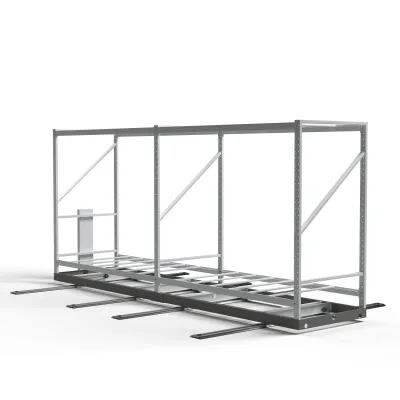
Find 30 listings for powder coated steel planting racks with drainage channels designed for warehouse, supermarket, and industrial applications. Buyers can compare specifications including dimensions, load capacity, and customization options across multiple models.
Key considerations
Products List




Comprehensive Sourcing Guide
Strategic Sourcing Guide for Powder Coated Steel Planting Racks with Drainage Channels
Procuring industrial-grade planting infrastructure requires a nuanced understanding of material integrity, structural adaptability, and compliance with safety standards. The core keyword, "powder coated steel planting racks with drainage channels," points toward a specific subset of agricultural and industrial storage solutions designed to support hydroponic systems, warehouse-based farming, and multi-level storage applications. Buyers must navigate a market where product attributes often overlap between heavy-duty warehousing equipment and specialized agricultural machinery. This guide synthesizes available product data to provide a disciplined framework for evaluating suppliers, verifying technical specifications, and ensuring long-term operational reliability without relying on unverified marketing claims.
Technical Specifications and Material Composition
The foundation of any reliable planting rack lies in its material composition and structural design. Based on observed product data, the primary construction materials for these systems include Stainless Steel, Chrome Lean, Iron, and Steel, often combined with PVC components for specific functional elements. The surface treatment is a critical differentiator; the "powder coating" specified in the core keyword is explicitly confirmed in the product attributes as a standard process for steel components. This treatment is essential for providing corrosion protection, a vital feature for environments exposed to constant moisture, nutrient solutions, and high humidity typical of hydroponic operations.
Dimensions and customization capabilities vary significantly across the supply base. While some units are defined by fixed standards such as 400154150Cm, the majority of viable options offer highly flexible sizing. Specifications indicate that length can be customized in increments of 1, 2, 4, 6, or 8 meters, or fully customized to site requirements. Width options typically range from 1 meter to 1.2 meters, with further customization available. For vertical systems, the structure is often described as a "Rack" type with "Multi-Level" or "Pallet Racking" configurations. The single package size for certain models is recorded as 405X39X48 Cm, which is a crucial data point for logistics planning and warehouse storage before assembly.
The structural integrity is further defined by specific manufacturing parameters. Wall thickness for certain steel components is observed at 0.8mm, with a diameter of 28.0mm for tubular elements. Load-bearing capacity is a paramount specification; data indicates a loading capacity of 1.5 tons per level for specific pallet flow rack models, while other heavy-duty units are rated for weights up to 500kg. The installation type is consistently noted as "Assembly," suggesting that these systems are delivered as flat-pack components requiring on-site construction. This modular approach facilitates transport but necessitates careful verification of the assembly instructions and required tools.
Compliance, Certification, and Safety Standards
In the B2B procurement of agricultural and industrial equipment, compliance with international standards is non-negotiable. The product data confirms the presence of CE certification for several models, indicating adherence to European health, safety, and environmental protection standards. Additionally, ISO certifications are frequently cited, with specific references to ISO9001 for quality management systems and general ISO compliance for manufacturing processes. These certifications serve as a baseline indicator that the supplier maintains a documented quality control system, though buyers must verify the validity of these certificates for the specific batch of goods being purchased.
When evaluating compliance, buyers should look for evidence of "Corrosion Protection" as a stated feature, which is directly linked to the powder coating process. The "Open" structure attribute suggests that the racks are designed for airflow and water drainage, which is consistent with the "drainage channels" requirement in the core keyword. However, the specific design of these channels is not explicitly detailed in the provided data. Buyers must request technical drawings or physical samples to verify that the drainage channels are integrated effectively to prevent water pooling, which could lead to structural degradation or root rot in hydroponic setups.
The origin of the products is another compliance factor. The data indicates origins in China, specifically Nanjing and Guangdong. While these are major manufacturing hubs, buyers should ensure that the supplier provides a clear chain of custody and that the products meet the import regulations of the destination country. The "Exported Packing" attribute suggests that the supplier is experienced in international logistics, but the specific packaging standards (e.g., wooden frames vs. plastic film) should be confirmed to ensure the racks arrive without damage.
Cost Drivers and Pricing Dynamics
The pricing landscape for powder-coated steel planting racks is highly variable, reflecting the diversity of specifications and customization options. The observed price range spans from $0.6 to $6,700 USD. This wide disparity is driven by several key factors. The most significant driver is the level of customization. Units with standard dimensions and pre-defined configurations will naturally fall on the lower end of the spectrum, while fully customized systems with specific lengths, widths, and load capacities will command higher prices.
Material costs also play a substantial role. Systems utilizing Stainless Steel or Chrome Lean components will be more expensive than those using standard Iron or basic Steel with PVC additions. The weight of the unit is another indicator of cost; a 68kg unit represents a different price point than a 500kg industrial-grade rack. The "New Type" development status of certain models suggests that innovative designs may carry a premium compared to "Conventional" development units.
Minimum Order Quantity (MOQ) is a critical cost driver for small to medium-sized buyers. The observed MOQ range is 1 to 10,000 units. Buyers seeking small quantities must be prepared for higher per-unit costs or may need to negotiate with suppliers who have lower MOQ thresholds. Conversely, large-scale procurement can leverage economies of scale, potentially reducing the unit cost significantly. Lead times, while not explicitly quantified in the data, are often correlated with the level of customization; "Customized" orders typically require longer production cycles than "Common Use" or standard inventory items.
Typical Applications and Operational Versatility
The versatility of powder-coated steel planting racks makes them suitable for a wide range of applications beyond simple storage. The "Vertical hydroponic system" attribute highlights their primary use in modern agriculture, where space efficiency is paramount. These racks are designed to support grow lights and facilitate the "Easy to Operate" workflow required for planting, maintenance, and harvesting. The "Adjustable" mobility feature allows for reconfiguration of the growing space to accommodate different crop sizes or changing operational needs.
In industrial settings, these racks serve as "Warehouse Rack" and "Industrial" storage solutions. The "Multi-Level Racking" and "Pallet Racking" configurations allow for the dense storage of materials, including raw agricultural inputs or finished goods. The "Span Adjustable" and "Flexible Storage" functions enable the racks to adapt to varying inventory sizes, making them ideal for supermarkets and distribution centers that handle diverse product lines. The "Common Use" serviceability rating suggests that these units are designed for general-purpose applications, reducing the need for specialized, single-use infrastructure.
The integration of "Grow Light" as an optional system further expands the application scope to controlled environment agriculture. This feature allows buyers to create fully integrated growing environments within a single procurement order. The "Open" structure ensures adequate ventilation, which is critical for preventing mold and ensuring healthy plant growth in enclosed spaces.
Supplier Evaluation and Selection Criteria
Selecting the right supplier requires a rigorous evaluation process that goes beyond price comparison. Buyers should prioritize suppliers who demonstrate transparency in their manufacturing processes and provide clear documentation of their certifications. The presence of CE and ISO certifications is a positive indicator, but buyers must verify that these certifications are current and applicable to the specific product models being sourced.
The "Development" status of the product is another evaluation metric. "New Type" developments may offer superior features but could carry higher risks regarding maturity and support. "Conventional" developments, while potentially less innovative, often come with a track record of reliability and established supply chains. Buyers should assess the supplier's ability to handle "Customized" orders, as the flexibility to adjust length, width, and load capacity is a key differentiator in this market.
Logistics capabilities are also essential. The "Exported Packing" and "Wooden Frame" attributes indicate that the supplier has experience with international shipping. However, buyers should confirm the specific packaging standards to ensure that the racks are protected during transit. The "Single Package Size" of 405X39X48 Cm provides a baseline for logistics planning, but buyers must verify if this applies to the specific model they are ordering.
Quality Control and Long-Term Procurement Considerations
Quality control is paramount for equipment that will be exposed to harsh environmental conditions. The "Powder Coating" process must be scrutinized for uniformity and thickness to ensure long-term corrosion resistance. Buyers should request samples or test reports that verify the coating's adhesion and durability. The "Corrosion Protection" feature should be validated through independent testing or third-party certification.
Long-term procurement considerations include the availability of spare parts and the ease of maintenance. The "Assembly" installation type implies that the racks can be disassembled and reassembled, which is beneficial for relocation or expansion. However, buyers must ensure that the supplier provides clear assembly instructions and technical support. The "Adjustable" nature of the racks suggests that they can be modified over time, but buyers should verify the compatibility of any future modifications with the original design.
The "Serviceability" rating of "Common Use" suggests that the racks are designed for ease of maintenance, but buyers should still inquire about the availability of replacement parts and the supplier's warranty policies. The "New Type" status of some models may indicate that spare parts are not yet widely available, which could pose a risk for long-term operations.
Conclusion
Sourcing powder-coated steel planting racks with drainage channels requires a balanced approach that considers technical specifications, compliance, cost, and supplier reliability. The market offers a wide range of options, from standard warehouse racks to specialized vertical hydroponic systems. Buyers must carefully evaluate the material composition, surface treatment, and load-bearing capacity to ensure the selected racks meet their specific operational needs. By focusing on verified certifications, clear customization options, and robust quality control measures, buyers can secure a supply chain that supports efficient and sustainable agricultural and industrial operations. The flexibility of these systems, combined with their durability and adaptability, makes them a valuable asset for any organization looking to optimize their storage and growing capabilities.
FAQs
What materials are used for powder coated steel planting racks?
These racks are constructed from steel, iron, stainless steel, or chrome lean, often combined with PVC components. The steel elements receive a powder coating treatment to ensure corrosion protection in humid hydroponic environments.
Can the dimensions of these racks be customized?
Yes, customization is available for length, width, and overall size. Lengths can be selected as 1, 2, 4, 6, or 8 meters, while widths typically range from 1 to 1.2 meters, with further custom options possible.
What certifications do these industrial racks typically hold?
Many models carry CE certification and ISO standards, including ISO9001 for quality management. These certifications indicate adherence to safety and manufacturing standards required for international trade and industrial applications.
How is the load capacity defined for these storage systems?
Specific pallet flow rack models support a loading capacity of 1.5 tons per level, while other heavy-duty units are rated for weights up to 500kg. This capacity ensures stability for warehouse and supermarket storage needs.
What is the typical installation method for these vertical systems?
The installation type is consistently noted as assembly, meaning the units are delivered as flat-pack components requiring on-site construction. This modular approach facilitates transport but requires careful verification of assembly instructions.
Which surface treatment provides corrosion protection for these racks?
Powder coating is the standard surface treatment applied to the steel components to provide essential corrosion protection. This feature is critical for preventing degradation in environments exposed to constant moisture and nutrient solutions.